
Cindera is a BYOD patient communication platform that lets hospitalized patients submit categorized requests from their own phones, routes each request to the right staff role, and gives patients real-time visibility from "sent" to "resolved."
Visit live website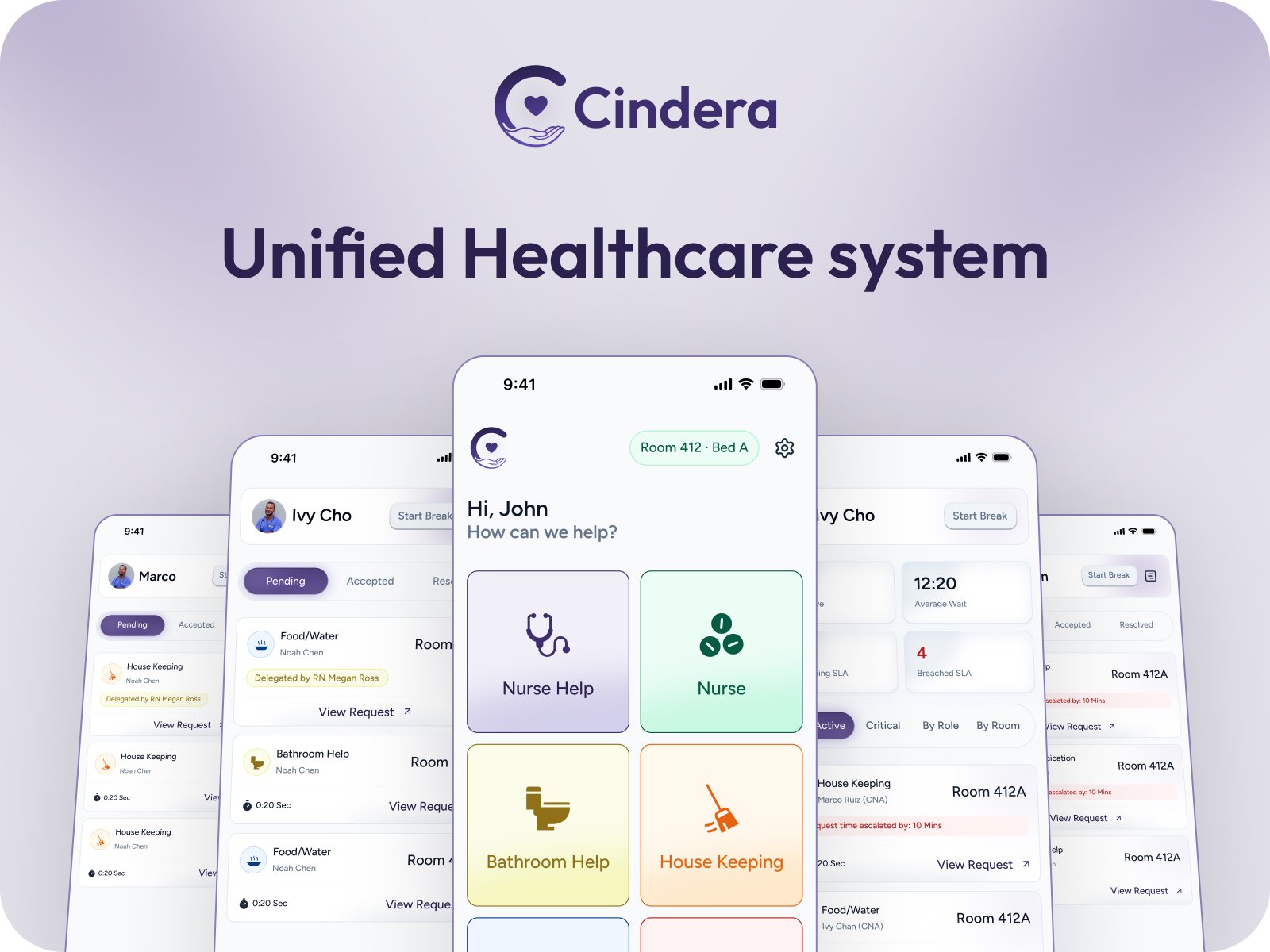
Non-RN Call Volume
Typical call-light requests suited for support roles
Avg. Response Time
Common U.S. hospital call-light delay
Request Categories
Nurse, pain, bathroom, housekeeping, food/water, urgent
Live Tracking
Sent → Seen → On the Way → Resolved
Industry
Healthcare
U.S. hospitals · inpatient care
Services
Product Design
BYOD patient communication · mobile app + staff dashboards
Timeline
16 Weeks
UX Research · Design · Build · QA & Deployment
Team
6 Specialists
1 Strategist · 1 UX Designer · 1 Mobile Dev · 1 Backend Dev · 1 Frontend Dev · 1 QA
Technology
React Native · Node.js
PostgreSQL · WebSockets · Firebase · AWS
Traditional nurse call systems treat every patient need the same. A patient presses a button, a light turns on, and a nurse or unit staff member often has to physically respond just to learn whether the patient needs clinical help, bathroom assistance, water, housekeeping, or something urgent.
The result is an undifferentiated workflow bottleneck. Nurses become the default routers for many requests that could be handled by CNAs, housekeeping, dietary, or other support roles. Patients wait without visibility, staff lose time, and hospital leaders lack clear operational data on response times and request patterns.
The core problem: The problem is not that patients cannot ask for help. The problem is that the request is not categorized, routed, tracked, or escalated intelligently before staff are interrupted.
A purpose-built system designed around the specific constraint — not a generic tool configured to fit.
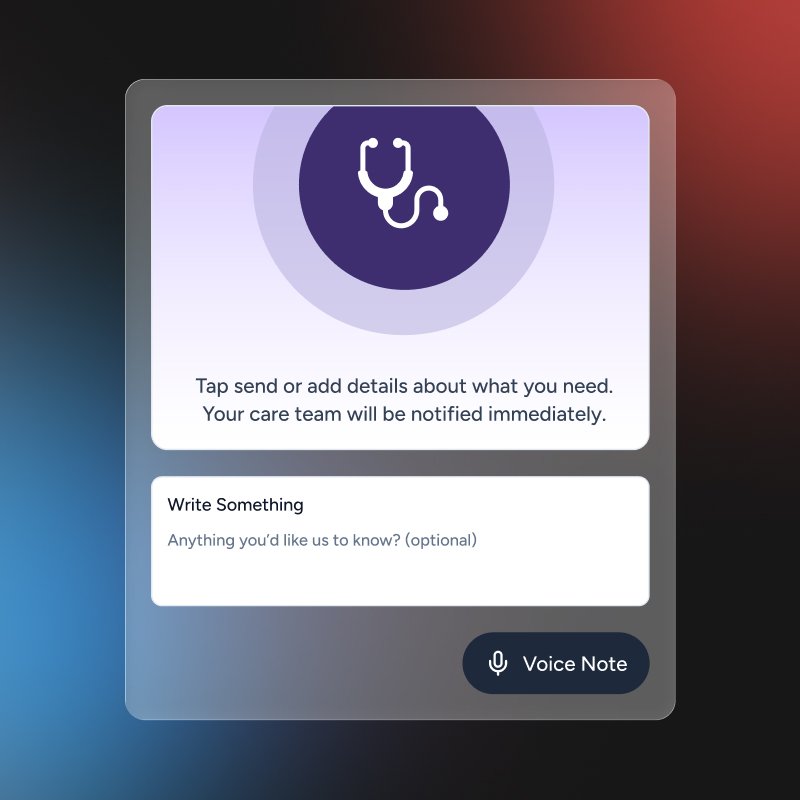
Patients use their own smartphone or a hospital loaner device to submit one of six categorized requests: Nurse Help, Pain/Medication, Bathroom Help, Housekeeping, Food/Water, or Urgent Alert. Optional text or voice notes add context without slowing down the primary action.
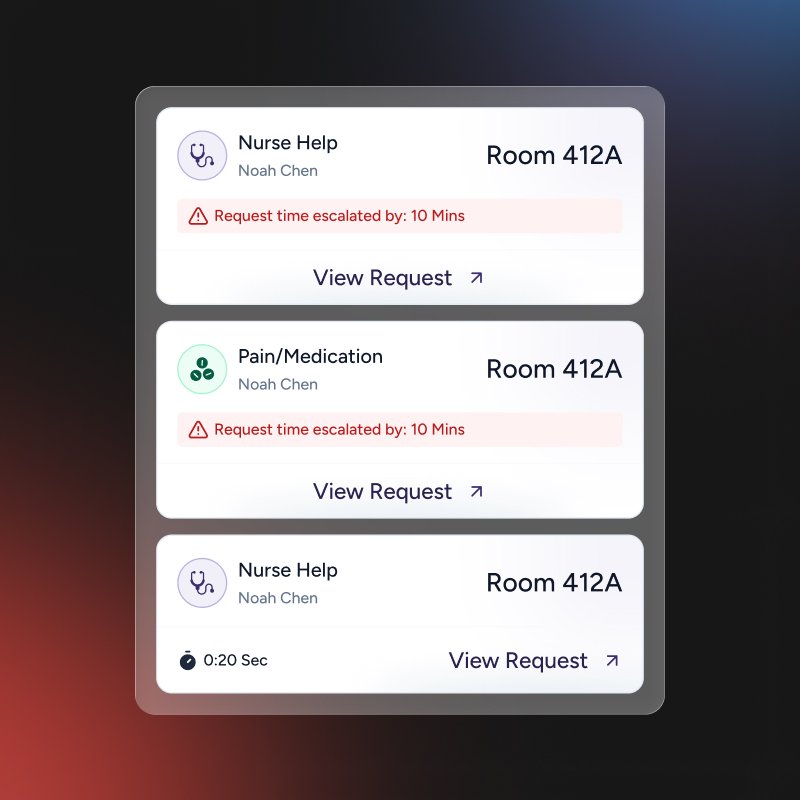
Each request is routed to the correct operational role based on category and assignment: clinical and pain requests to the RN, bathroom and mobility support to the CNA/PCT, cleaning to housekeeping, and food or water to dietary staff.
After submitting a request, patients see a live request banner and a four-stage progress tracker: Sent, Seen, On the Way, and Resolved. This gives patients reassurance that their request has been received and is moving through the care workflow.
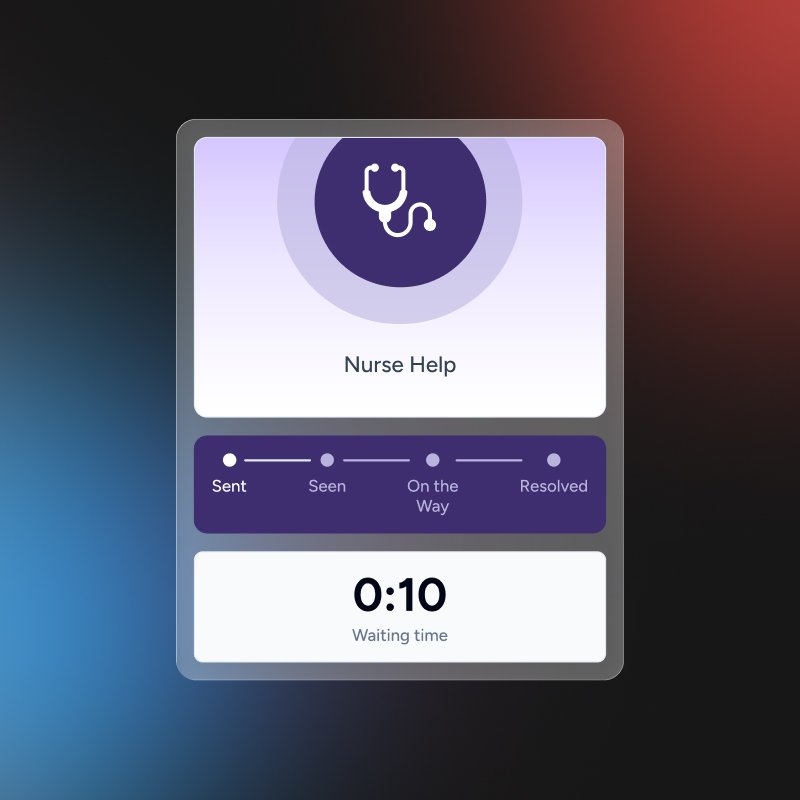
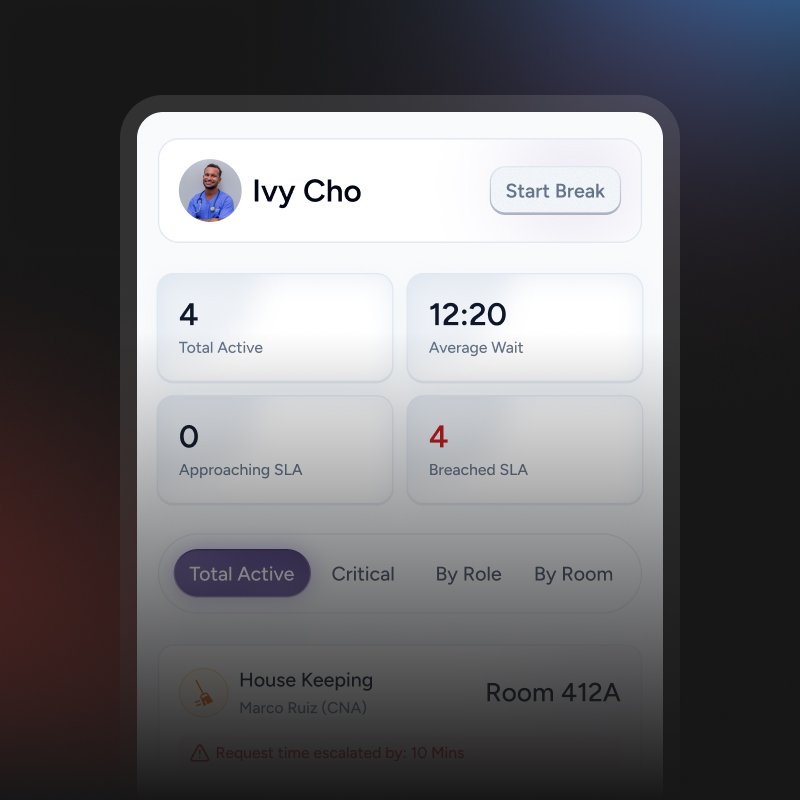
If a request is not accepted within the configured SLA threshold, Cindera escalates it to backup staff and the charge nurse. The charge nurse sees active and breached requests across roles, enabling faster triage and reassignment.
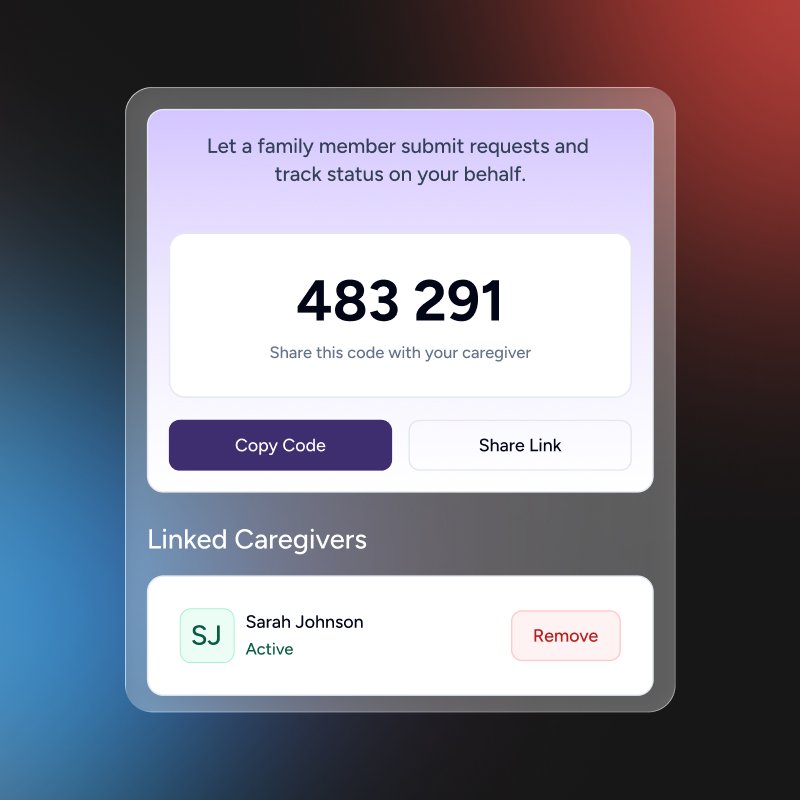
Family members or caregivers can be invited with a secure access code and submit requests on behalf of the patient. Staff see that the request was submitted by a caregiver while the patient and caregiver both receive real-time status updates.
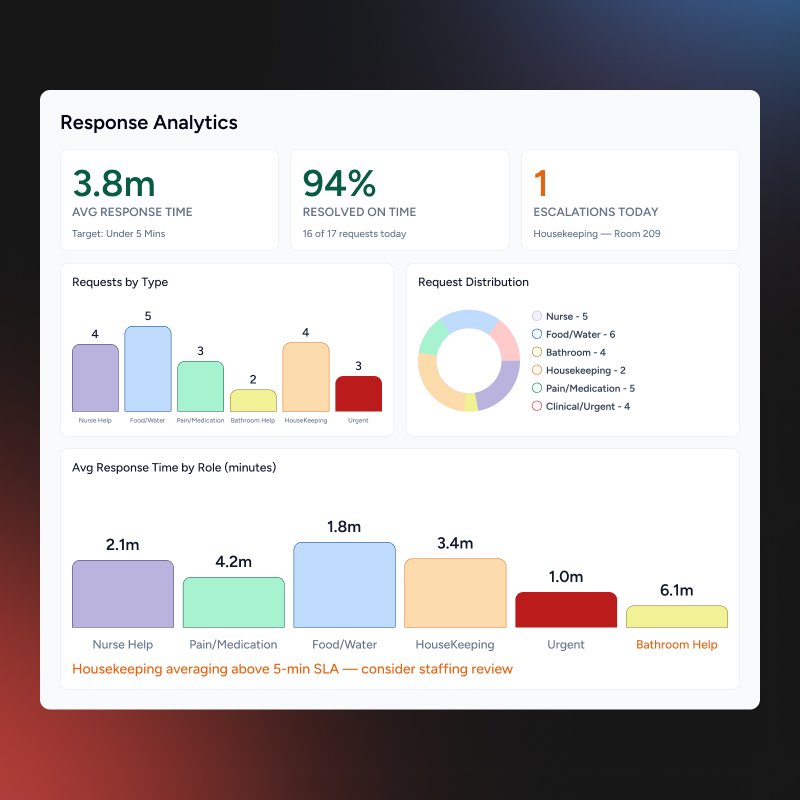
Administrators can review aggregate response times, SLA compliance, request volume by department, patient satisfaction signals, and operational trends that support HCAHPS and patient experience improvement efforts.
No bolt-on integrations. Every tool chosen for the specific constraints of this project.
Cindera transforms the nurse call experience from a single undifferentiated alert into a categorized, routed, trackable workflow — faster response, clearer ownership, and better patient reassurance.
The platform gives patients a simple way to say what they need, gives staff role-specific queues instead of noise, and gives charge nurses visibility into bottlenecks before they become patient experience failures.
The outcome is not just a better app. It is a more intelligent operating layer for inpatient communication — designed to reduce avoidable nurse interruptions, improve responsiveness, and surface the operational data hospital leaders need.
Before
After
No pitch. No pressure. Tell our AI about your challenge — it will match you with the most relevant solution and show you exactly how we'd approach it.
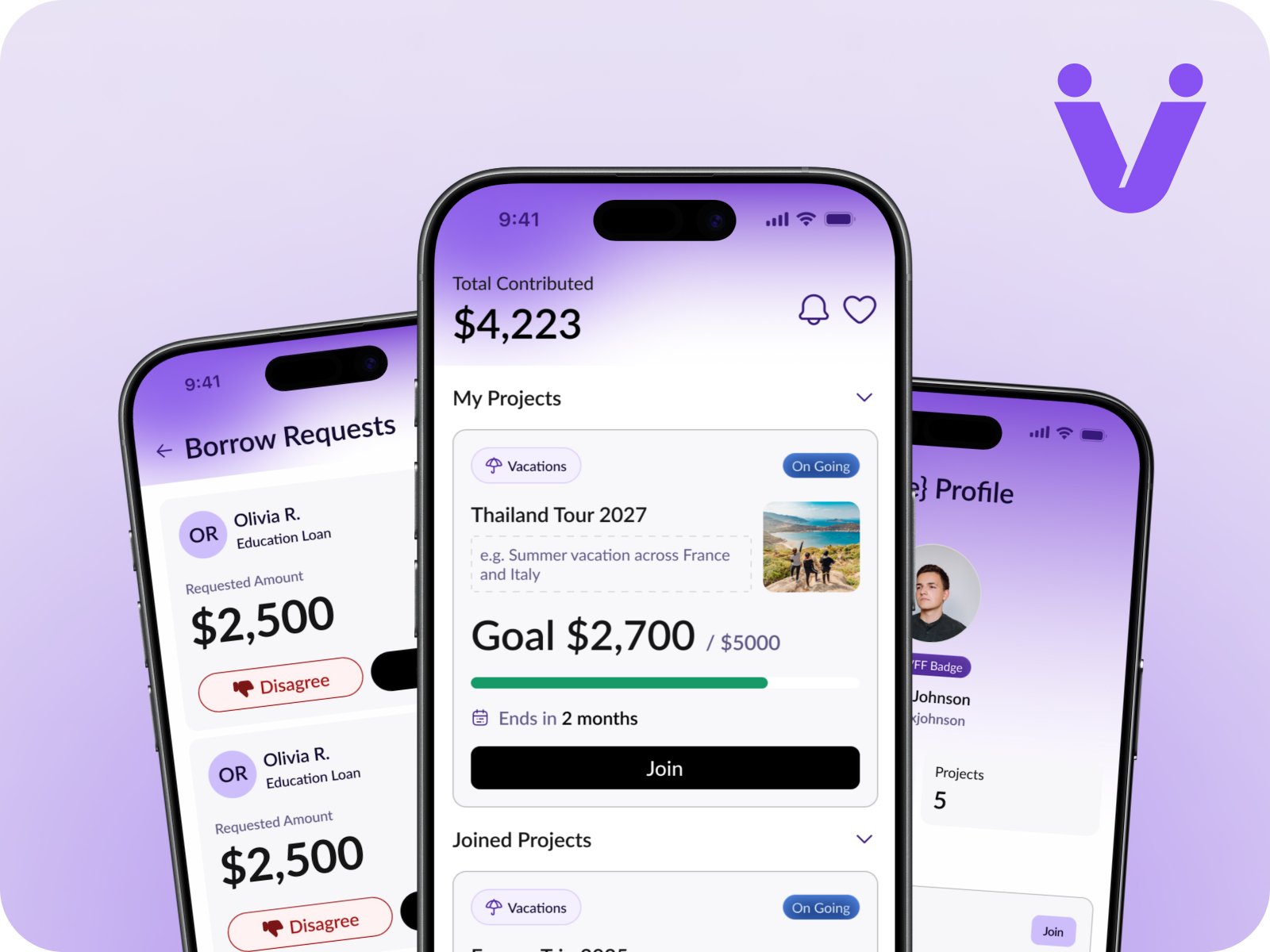
Informal group savings — susu, chama, tontine — have existed for generations with no structure, no accountability, and no app. We designed Vesties: a full-stack mobile platform that gives trusted groups a democratic, transparent, and governed way to pool money, borrow from the collective pot, and invest together — all from their phones.
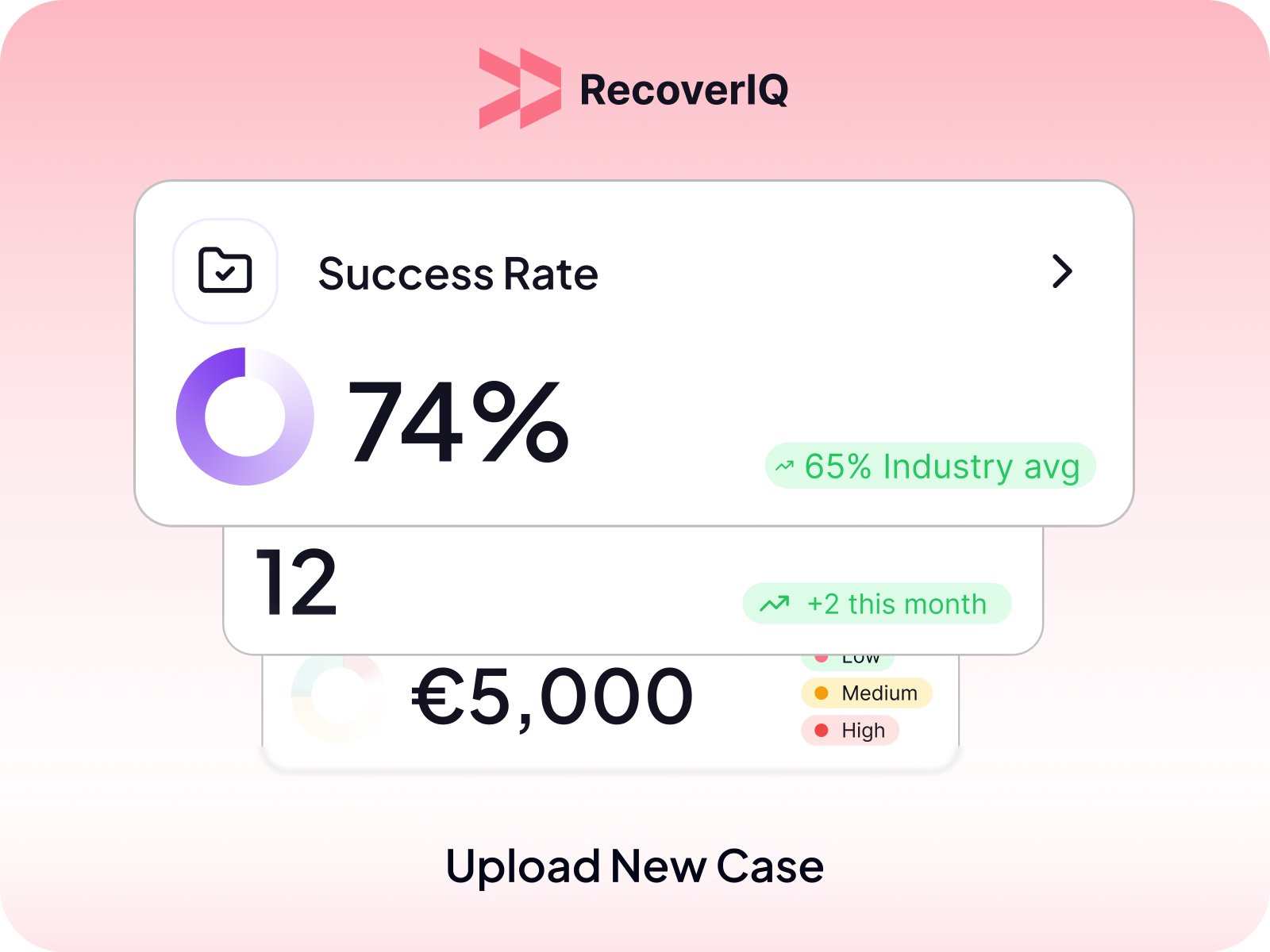
The client had the world-class legal network but no digital product. We built RecoverIQ — an AI-powered platform that assesses any overdue invoice's recovery probability using 111 indicators, generates a customised success fee in real time, and activates a global collection mandate with a single e-signature. Zero upfront cost. No legal expertise required.